
Better Art
Speaking of paintings, what makes a good one good?

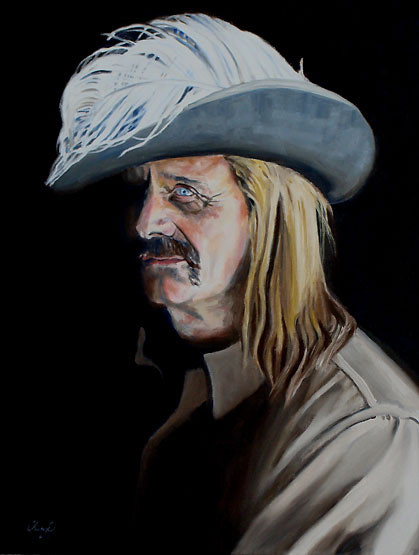
Some things are taken for granted as being correct. Things like; art is subjective.
There are ways that this is true, art being subjective, and ways it can be misconstrued.
One easily understood truth about the subjectivity of art is the viewer’s relationship to the subject, or colours if there is no subject. Simply put, if you like horses and my painting is of a horse, you are more likely to like it. Not guaranteed, but more likely.
The same could be said of any colour. If blue is your favourite colour and I use a lot of blue, pulling out the credit card might feel painless. If it matches your couch - no - let’s not even go there.
So, yes, art is subjective.
That said, not all paintings are equally well done, despite the subjectivity of art.
There can still be better art.
Flavours of soup or of wine are subjectively appreciated as well, but some soup and some wines may simply taste good, or bad, to most people. The same goes for paintings.
Am I really saying there is bad art? It all depends on the purpose of the art.
As a learning experience, bad art is so good! Make messes, try things you have never tried before. Do studies that are never meant to be hung on a wall. Make glorious mistakes to give your creativity wings.
However, on the wall of a gallery, the art is still subjective, but hopefully if it has been curated in, it is better art.
Oooooh. Touchy subject. Who dares to judge art!
Well, if the gallery hopes to make some money, to afford their rent and pay their staff in order to show your art on its walls, the gallery owner has every right to judge. And, if a client is considering putting their hard earned dollars down for a work of art, of course they will judge.
A more worthwhile question is: what makes art better? And since painting is what I know best, I will speak very specifically to paintings.
What follows is my – subjective – opinion. Note: these criteria can be applied equally in abstract or representational (having a discernible subject) paintings.
1. Value use – the art should demonstrate that the artist understands the power of darks against lights. Areas where extremes of dark and light touch, will draw the eye, and so this aspect is used to a. Establish a focal point or b. Make a pathway for the eye. In addition, if a 3 dimensional effect is aimed for by the artist, good value use is crucial.
2. Large shapes are interactive and varied in size. This is just one of the considerations that comes with an understanding of the dynamics of composition.
3. Repeated shapes, such as flowers in a garden or small shapes like squares in an abstract, need variety in some of the following – size, angles of view, space between, colour, texture, and/or value.
4. Speaking of space between, a practiced understanding of negative spaces can greatly enhance a work of art. Negative space refers to shapes between the objects in the paintings, for example, the shapes between the branches of trees. These spaces can be just as important as the subject in building a good composition and need similar variety to keep them interesting.
5. A foundation of drawing skills that either is evident or even just hinted at in the case of abstract work, can enrich a painting.
6. An understanding of hard and soft edges and how they work together to establish focal points and allow the eye to flow or stop is a frequent component of better art.
It’s important to note that a better work of art does not have to be strong in all of the above aspects, but in my experience needs to be strong in one or two. Great works of art also can break some of these recommendations, while still be firmly grounded in one or two of the other mentioned attributes.
Learn the rules like a pro, so you can break them like an artist. - Pablo Picasso
The viewer does not have to understand these concepts in order to appreciate that some art is better. However, I do find that the more art a non-artist has been exposed to, the more they become intuitively drawn to art that exhibits strength in the above areas.
What do you think, fellow artists? Is this a valid list? Would you add or subtract anything to it? Or are you just annoyed that there are any lists at all for ‘better art’?
I would love to hear your thoughts.
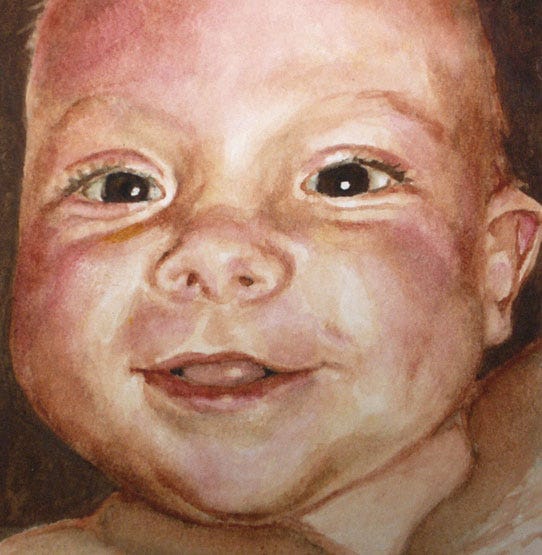
Art is not stagnant.
Just as people constantly change and hopeful grow, so your art should change and grow if it is an expression from the heart, which all good art should be.
As for comparison; there is only one valid way to compare as an artist who is learning. That is, to compare your artwork only with your own previous work. And all artists, no matter how long they have been painting, can be constantly learning.
If this represents your journey, artistic expression that speaks from your heart with form, colour, and subject (including pure abstract), you are on a joyful path. Part of what you learn is to embrace that the act of creating is much more important than the end product. It doesn’t matter whether or not your work ever graces a gallery wall.
Being creative is just plain good for the spirit, which ends up benefiting the body too. But that would be another article.
I hope that you do enjoy visiting art galleries to appreciate the art of others. I also hope that you do not have any pressure about whether or not your art is there. Art is so much more than just a potential commercial product.
Final note…
Although I ran down the bunny trail of ‘better art’ today, I firmly believe that dynamic art, like a vibrant life, is about the creativity more than the end product.
Yours for a kinder and more creative world.
Cheryl O Art
Excellent points! Now to transfer them to a place where I will see them between brushstrokes. 😊